
Storytelling Through CGI: Turning Ideas into Impact
In a world where attention spans are shorter than a TikTok reel, brands can no longer rely on static product shots or boring billboard lines to win consumer hearts. People don’t just want to “see” a product anymore—they want to feel it, experience it, and live inside the story.
This is where CGI (Computer-Generated Imagery) enters the stage—not as a background prop from Hollywood blockbusters, but as the front-row hero of brand storytelling. What once created dinosaurs in Jurassic Park or galaxies in Star Wars is now transforming bottles, sneakers, cars, and even ads into unforgettable experiences.
But the real magic? CGI isn’t just about “looking cool.” It’s about making ideas believable, emotional, and impactful. It helps brands craft realities beyond physics, ignite emotions through surreal visuals, and create lasting imprints on the audience’s memory.
Let’s dive deeper into why CGI storytelling works, how brands across industries are using it, and how businesses—big or small—can start their own CGI journey.
Why CGI Works as a Storytelling Powerhouse
Before we talk about examples, let’s break down why CGI has become the go-to weapon for brands.
- Limitless Creativity—Forget gravity, size, or logic. With CGI, a sneaker can run faster than light, a soda bottle can glow like a galaxy, and a city can flip upside down. Your imagination is the only boundary.
- Emotional Amplifier – CGI dramatizes emotions. A simple story of joy, fear, nostalgia, or love can be heightened into something unforgettable when wrapped in visually stunning effects.
- Scalability—Once you create CGI assets, they can live everywhere—TV ads, YouTube pre-rolls, Instagram reels, billboards, or even VR/AR spaces.
- Long-Term Cost Efficiency – While setting up CGI is an investment, it saves brands from reshooting expensive sets, flying crews across locations, or rebuilding physical environments.
- Future-Proof Storytelling—As the Metaverse, AR, and VR keep rising, CGI is the backbone. Without CGI, immersive digital experiences simply can’t exist.
In short, CGI isn’t just about visuals—it’s about making imagination profitable.
Industry-Wide Impact: How CGI is Shaping Brands
Today, CGI is everywhere—from cars to colas, fashion to films, and tech to travel. What used to feel futuristic is now mainstream marketing. Let’s look at how brands are rewriting their stories with CGI.
1. Mercedes-Benz: Driving into Tomorrow, Today
When Mercedes launched its Vision AVTR concept, it didn’t just show a car—it showed the future of mobility.
The car was placed in surreal, otherworldly CGI landscapes—glowing bioluminescent forests, futuristic cities, and flowing light trails. Instead of “selling specs,” Mercedes sold a dream of innovation, sustainability, and luxury.
CGI made the car feel like something out of Avatar (literally, since it was inspired by the film). Consumers weren’t just admiring the car; they were dreaming about living in that future.

Lesson: Don’t just showcase features—show your audience the world they’ll belong to with your brand.
2. Coca-Cola: Turning Bottles into Universes
Coke has always been a master of emotional advertising. But with its Real Magic campaign, it took things further.
Ordinary Coke bottles were transformed into glowing portals of warmth, joy, and celebration through CGI. Bottles opened into magical universes filled with laughter, light, and festive cheer.
This wasn’t about “drink Coke, stay refreshed.” It was about Coke = togetherness, community, and happiness.
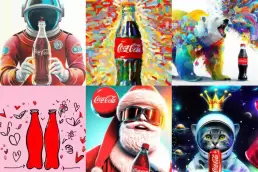
Lesson: Even an everyday product can become extraordinary when CGI wraps it in emotional storytelling.
3. Flipkart: Reimagining E-Commerce
Scrolling through product catalogs can feel dull. Flipkart knows this. That’s why the brand has embraced CGI to turn everyday online shopping into an aspirational, futuristic experience.
Sneakers sprint across neon tracks. Fashion apparel floats gracefully in surreal digital skies. Electronics transform in 3D with dynamic lighting.
Flipkart isn’t just showing products—it’s saying, “Shopping with us isn’t just utility; it’s an adventure.”

Lesson: In competitive markets, CGI can make even the most ordinary experience feel extraordinary.
4. Netflix: Blurring Fiction & Reality
When Netflix India promoted Stranger Things, it went beyond posters and trailers. Through CGI, it brought the show’s creepy portals and monsters straight into Indian streets and metro stations.
Imagine walking to work and seeing a CGI monster lurking in your metro ad space—suddenly, you’re not just a viewer; you’re part of the show’s universe.
This campaign didn’t just advertise—it immersed fans into the world of Stranger Things, making the series a cultural event.

Lesson: The best CGI doesn’t stay on-screen—it spills into real life.
5. Apple: Tech with a Cinematic Touch
Apple doesn’t do boring product launches. Every keynote is like a blockbuster movie.
Chips zoomed into at atomic levels, iPhones rotated at impossible angles, and features unfolded like magic—all thanks to CGI. Instead of dry tech specs, Apple creates visual stories that make you feel the genius of the product.
Lesson: If your product is technical or complex, CGI can make it emotional and cinematic.
Beyond Pretty Visuals: The Real Power of CGI
CGI isn’t just about creating Instagrammable moments. Its real power lies in:
- Breaking Physical Barriers – Showing what can’t exist in reality.
- Creating Emotional Hooks—Making consumers feel before they think.
- Standing Out in Crowded Markets—When everyone else shows the same shots, CGI makes your brand different.
- Consistency Across Platforms—Reusing CGI assets across ads, reels, AR filters, or VR experiences.
Think of CGI as the new language of imagination—one that resonates across industries.
How Brands Can Start Their CGI Journey
Not every brand needs to create a futuristic CGI masterpiece overnight. Here’s how to start smart:
- Think Beyond the Product—Don’t just show “what it is.” Show “what it means.” Sell the emotion, not just the object.
- Integrate strategy with CGI—CGI should elevate your brand positioning. If your brand stands for simplicity, don’t overcomplicate visuals. If it stands for luxury, CGI should feel premium.
- Start Small, Scale Smart—Even a short CGI clip for Instagram can outperform a traditional photo ad if the story is sharp.
- Blend Realism with Imagination—The sweet spot? When audiences can relate to it but still be surprised.
Unlock CGI Storytelling with Graptive Design
At Graptive Design, we see CGI as more than a design trick—it’s a storytelling powerhouse. We help brands go from “nice visuals” to memorable brand narratives.
Here’s what we do:
- Brand Campaigns & CGI Visuals—Turning your product into a cinematic story.
- Creative Strategy—Ensuring design supports your business goals.
- Digital Content & Motion Graphics—From reels to ads, we keep your audience hooked.
- Advertising Design—Crafting campaigns that don’t just look good but actually deliver impact.
Because here’s the truth: Your ideas deserve more than words. They deserve worlds.
Final Takeaway
CGI is no longer the future—it’s the present. It’s what turns a car into a vision of mobility, a soda bottle into a universe, a shopping app into an adventure, and a product launch into cinema.
In a cluttered digital landscape, CGI helps brands do the one thing that truly matters: stand out by telling stories that stick.
So the next time you’re thinking of your brand’s campaign, ask yourself:
Do I just want to show my product?
Or
Do I want to create an experience people will remember?
Because in 2025, the brands that win won’t just be the ones with better products. They’ll be the ones with better stories—and CGI is the brush that paints them.
At Graptive Design, we’re ready to help brands like yours leap into that world. Let’s create visuals that don’t just look good but make your audience feel, dream, and act.