
When you hear the words “B2B marketing,” what pops into your head?
Spreadsheets.
Numbers.
ROI charts.
Endless presentations.
And you’re not wrong—B2B has always been positioned as a game of logic. “Hard facts win deals,” we were told.
But here’s the shift that 2025 has made crystal clear: B2B winners aren’t just the ones with better pricing or stronger product specs. They’re the ones who can design a story that connects.
Because here’s the truth: we often forget that even in B2B, people buy from people.
And design—your visuals, your experiences, your storytelling—is the language that speaks before a single sales pitch does.
The Silent Power Shift: Why Design is No Longer Cosmetic
Let’s face it: the buyer has changed.
According to recent surveys, 73% of B2B buyers today are millennials or Gen Z. These aren’t the buyers who tolerate clunky websites, text-heavy brochures, and sales reps who expect “patience.”
These are digital-first generations who grew up in an era of intuitive UX, Instagram-worthy visuals, and snappy digital content. Their expectations from a brand—whether consumer or enterprise—are the same:
- Simple navigation (they don’t want to “figure out” your product)
- Bold visual clarity (they skim, they don’t study)
- Instant credibility signals (if your design looks sloppy, you lose trust instantly)
- Emotional connection (yes, even in industries that look “boring”)
Here’s the hard truth:
👉 If your brochure looks like a 2009 PowerPoint template, you’ve lost them before the first click.
Design today isn’t “extra.” It’s the entry ticket to even being considered.
Beyond Logos: The Real Depth of B2B Design
Here’s where most businesses get it wrong. They think design means:
“Let’s update the logo. Maybe add a modern font. Change our brand colors.”
Sorry to break it to you—that’s surface-level.
In B2B, design runs far deeper.
- UX = Trust at First Click
Your website is your digital handshake. If it loads slow, looks cluttered, or feels outdated, the buyer is gone. Great UX isn’t about beauty—it’s about respecting the buyer’s time.
A CTO or Procurement Manager isn’t going to wrestle with poor navigation. They’ll just move to a competitor who made things easier.
- Micro-Design, Macro Impact
Sometimes, the difference is in tiny details. A crisp infographic, smart iconography, or a short animated explainer can simplify what a 30-page whitepaper never could.
Think of it as design being the translator between your complexity and the buyer’s limited time.
- Emotional Layering in “Serious” Industries
Fonts. White space. Color tones. These might sound trivial, but they subconsciously communicate seriousness, modernity, reliability.
B2B buyers aren’t robots—they respond emotionally, even in industries like manufacturing or IT.
- Consistency Across Every Touchpoint
Your LinkedIn carousel, trade show booth, sales deck, case study template—all of them together create a brand experience. If they’re mismatched, you look disorganized. If they’re seamless, you look trustworthy.
Where You Least Expect It: Design Transforming “Dry” Industries
Let’s bust a myth: design is not just for consumer brands.
In fact, the industries you’d least expect are where design is quietly becoming a growth weapon.
- Fintech SaaS → Clean dashboards & friendly data visualization win adoption.
- Manufacturing → AR product previews and interactive 3D catalogs are replacing paper spec sheets.
- Healthcare Tech → Patient portals with intuitive design reduce frustration (and complaints).
- Enterprise IT → Storytelling-driven demos simplify complexity and create clarity.
These are not “fluff” improvements—they’re conversion drivers.
Who’s Doing it Right? Real B2B Design Wins
Let’s spotlight a few brands that prove the power of design-driven marketing in B2B.
- Zoho – Designing for Simplicity
Zoho took a hard look at onboarding. Instead of overwhelming SMEs with dashboards and features, they created guided, minimal UX flows.

The result? Faster adoption and happier users. Simplicity by design.
- Freshworks—Humanizing Enterprise IT
Freshworks didn’t want to look like “just another SaaS.” Their branding uses illustrations, friendly colors, and conversational design language.

It makes IT tools look less intimidating—and more like a friend helping you out.
- Tata Steel B2B – Interactive Catalogs
Instead of static PDFs, Tata Steel rolled out interactive brochures and AR product previews.
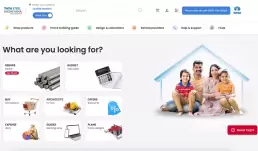
Dealers and buyers can now explore products on their own, reducing reliance on endless sales calls.
- IBM – Storytelling with Data
IBM took massive, boring datasets and turned them into visual stories. Through infographics and visual reports, decision-makers could digest insights faster and act confidently.

Where Most B2B Firms Fail Miserably
If design works so well, why aren’t all B2B firms investing in it?
Because they still see it as “cosmetic.”
Here’s where they go wrong:
- Design is treated as decoration instead of strategy.
- Sales gets budget, design doesn’t. A killer sales team can’t shine with boring visuals.
- Overuse of generic stock images—which makes you look like every other competitor.
- Ignoring digital-native buyers. The younger buyers expect design-first experiences.
Truth is, 80% of B2B firms underinvest in design—and that’s why their pitches fall flat.
The Science Behind It: Neuromarketing + Design
This isn’t just creative fluff. Design taps into how our brains are wired.
- Colors = instant memory triggers. (Blue = trust, green = growth, red = urgency.)
- Visual hierarchy = decision flow. Our eyes go headline → images → CTA.
- Reduced cognitive load = faster decisions. Clean design makes choices feel safe.
When a buyer is staring at a complex purchase decision, clarity feels like relief. And design delivers that.
Action Plan: How B2B Brands Can Use Design Right Now
Enough theory—let’s make it practical.
Here’s how you can bring design-driven marketing into action:
1. Audit Your Design Debt → Outdated templates and inconsistent visuals erode trust.
2. Redesign Buyer Touchpoints → From trade booths to LinkedIn creatives, create consistency.
3. Invest in Motion Graphics → Animated explainers simplify what jargon complicates.
4. Adopt Interactive Tools → AR catalogs, product tours, or clickable demos = higher engagement.
5. Make Case Studies Visual → Stop publishing text walls. Use infographics, charts, and testimonials.
6. Upgrade Sales Decks → A beautiful, easy-to-digest deck often closes more deals than a long pitch.
The Future of B2B: Design as the Silent Salesperson
Here’s a stat you can’t ignore: 70–80% of B2B research happens before a buyer ever speaks to sales.
That means…
Your sales pitch doesn’t shape first impressions.
Your pricing sheet doesn’t drive trust.
It’s your design-driven assets—the website UX, the product demo flow, the case study visuals, the explainer video—that decide if the buyer even picks up the phone.
Design is no longer the “finishing touch.”
It’s the silent salesperson.
Final Thoughts: The Edge Belongs to Design
Design isn’t about making things “pretty.” It’s about:
- Turning complexity into clarity
- Building instant credibility
- Guiding decision-making effortlessly
- Creating trust where logic alone can’t
The brands that will dominate tomorrow won’t just be the ones with the best product specs.
They’ll be the ones that know how to design their growth story.
And that’s exactly what we do at Graptive Design.
We don’t just make visuals—we craft design experiences:
- Brand identities that stand out
- Interactive campaigns that engage
- Motion graphics that explain without jargon
- Case studies and sales tools that actually persuade
Because in today’s B2B world, design isn’t the paint on the wall—it’s the foundation of the building.
Are you ready to let design be your growth engine?
Let’s build it together.